

Hard Freeze Damage & Swimming Pools: What Can Go Wrong (and What To Do)
(If you need to know how to winterize your pool, check out this guide from Dallas’ last big freeze)
Hard freezes can be brutal on swimming pools — especially in regions like North Texas, where pools aren’t designed for long periods of extreme cold. While most homeowners worry about frozen pipes inside the house, pool damage after a freeze is often more severe, more expensive, and harder to spot right away.
Understanding how freeze damage happens, what it affects, and what to do next can save thousands of dollars and prevent long-term structural issues.
Let’s take a look at what hard freezes can do to your pool — and how to mitigate the damage.
Why Freezing Temperatures Damage Pools
When water freezes, it expands by roughly 9%. That expansion creates intense pressure inside anything rigid — including pool plumbing, plaster, tile, concrete, and equipment.
If water is trapped anywhere it shouldn’t be, that pressure has only one outcome: cracking, shifting, or breaking.
Common Types of Pool Freeze Damage
1. Tile & Coping Popping or Shifting
Tile and coping damage is one of the most common (and visible) issues after a hard freeze.
How it happens:
Water seeps behind tile or coping through failing grout or mastic
That water freezes and expands
The pressure pushes tile or stone outward
Signs to look for:
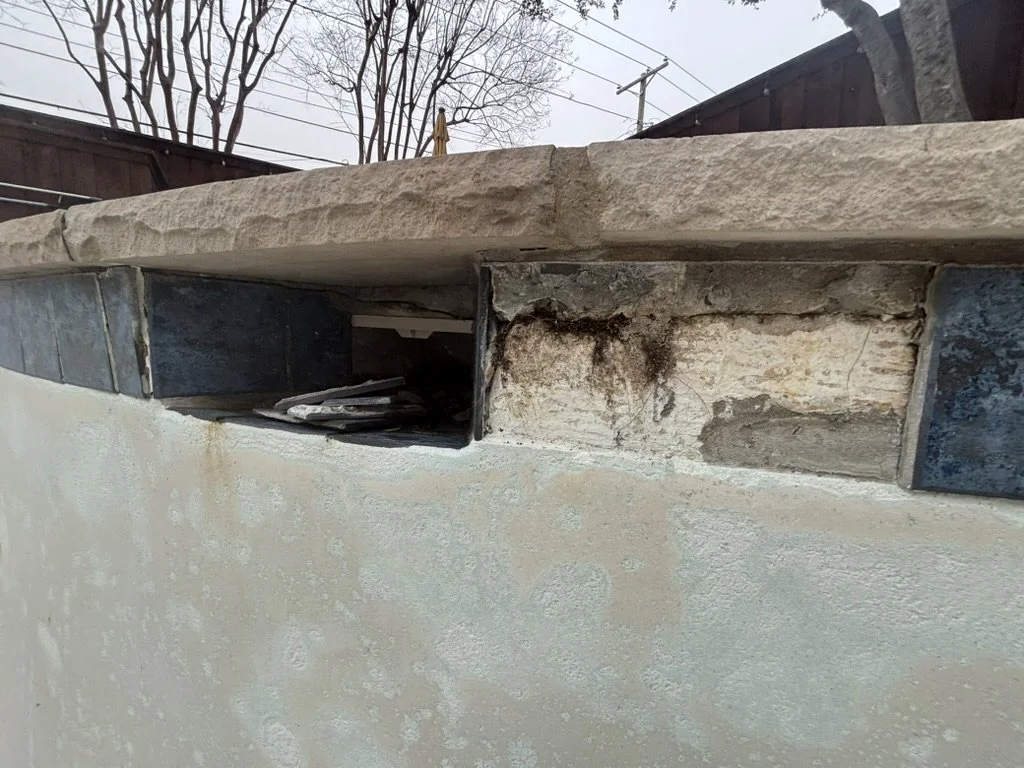
Missing Tile
Loose or missing tile
Hollow-sounding tile
Cracked grout or visible gaps
Coping stones lifting or shifting
How to mitigate:
Maintain mastic and grout joints
Repair loose tile early
Improve drainage around the pool
Typical repair cost:
👉 $600-$1,200+ depending on scope and materials
2. Plaster Cracking & Surface Damage
Pool plaster is porous. When water penetrates small cracks or imperfections and freezes, it can cause:
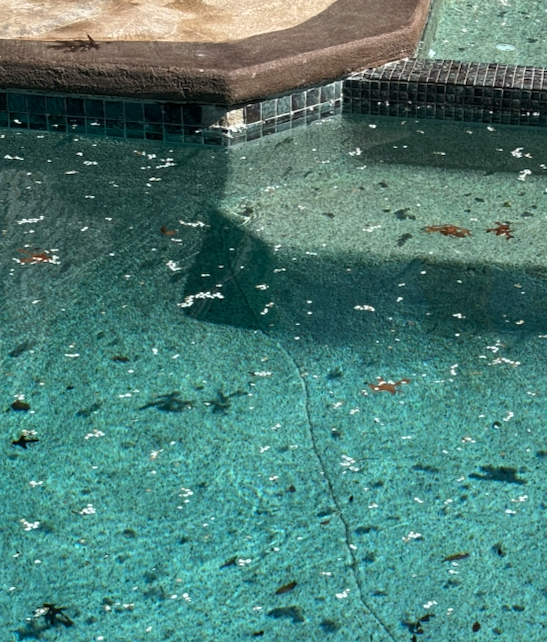
Pool Surface Crack
Hairline cracking
Chipping or flaking
Rough, delaminated surfaces
While plaster damage may start as cosmetic, it can quickly escalate if left untreated.
What to do:
Inspect the pool surface after any hard freeze
Address cracks promptly
Maintain balanced water chemistry to prevent further breakdown
Typical repair cost:
👉 Up to $10,000+ for full resurfacing if damage is widespread
3. Pool Equipment Damage
Freeze damage to pool equipment is extremely common — and often catastrophic.
When water freezes inside pumps, filters, heaters, or plumbing lines, internal components crack. Unfortunately, many of these failures aren’t visible until the system is turned back on.
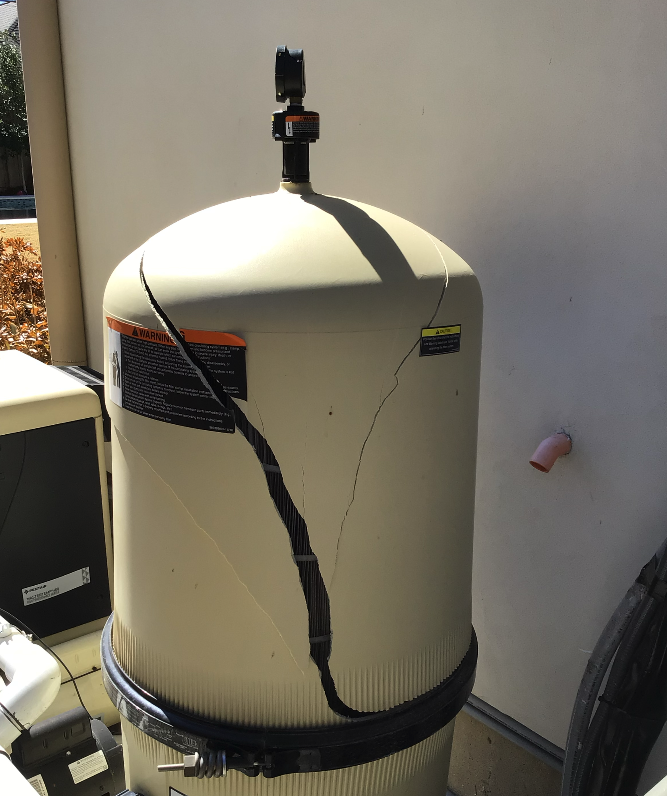
Cracked Filter
Common equipment failures include:
Cracked pump housings
Split filter tanks
Broken heater headers
Underground pipe breaks
How to mitigate freeze damage:
Run pool equipment continuously during freezing temperatures
Ensure freeze protection is enabled and functional
Drain equipment if the pool will be shut down
Insulate exposed plumbing
Typical repair or replacement costs:
Pump replacement: Up to $2,750
Filter replacement: Up to $2,200
Heater replacement: Up to $5,600
Underground plumbing repairs: Highly variable and often significant
4. Ground Shifting & Structural Stress
Freeze-thaw cycles cause soil to expand and contract — especially when excess moisture is present. Over time, this movement can lead to:
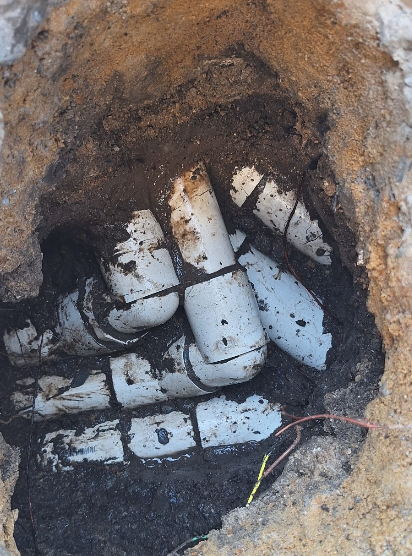
Pool Leak Underground
Plumbing Damage
Deck cracking or lifting
Coping separation
Structural stress on the pool shell
Leaks at fittings, skimmers, and returns
This type of damage often appears weeks or months after the freeze, making it harder to trace back to the original cause.
Prevention tips:
Maintain proper drainage around the pool
Keep mastic joints intact
Address leaks immediately
Monitor deck and coping movement
5. Leaks After a Freeze (The Hidden Problem)
Many freeze-related leaks don’t reveal themselves right away. Pipes may crack during freezing temperatures but only leak once water flow resumes.
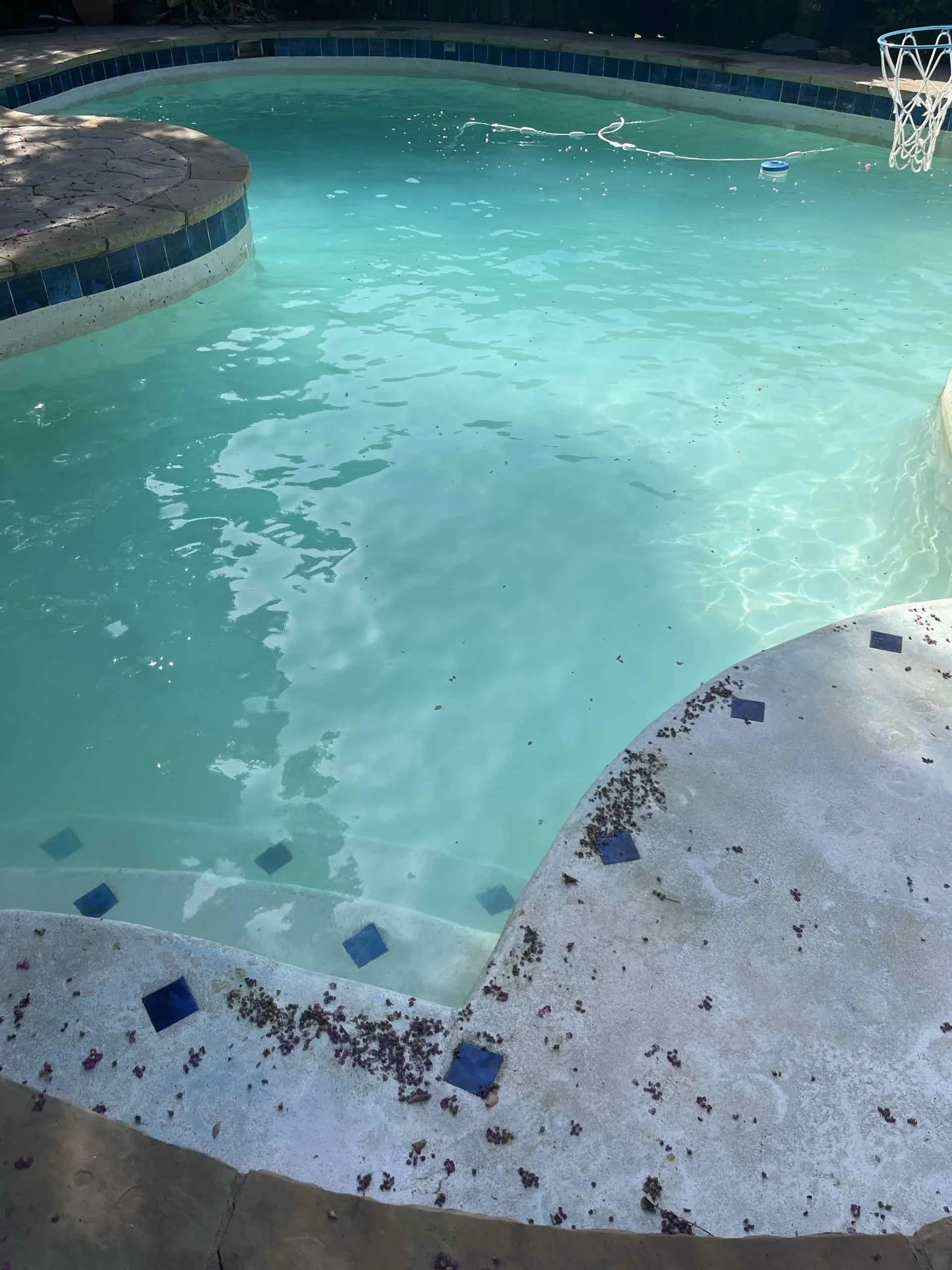
Water Level Low
Warning signs include:
Unexplained water loss
Air in the pump basket
Constant need to refill the pool
Wet areas around the deck or yard
What to do:
Track water loss closely after a freeze
Schedule professional leak detection if water loss continues
Repair early to prevent soil erosion and structural damage
Typical cost:
👉 Leak detections are often $650+, depending on location and severity, and repairs for leaks can be anywhere from $1,300-$3,000+
What to Do After a Hard Freeze
If your pool has been through a hard freeze, here’s what we recommend:
Inspect tile, coping, deck, and equipment visually
Restart equipment slowly and listen for air or leaks
Monitor the water level over several days
Address damage immediately — freeze damage compounds quickly
Final Thoughts
Hard freezes can cause significant pool damage, even when everything appears fine at first glance. The earlier problems are identified and repaired, the more money you save — and the longer your pool will last.
If your pool has been through a freeze and something doesn’t look (or sound) right, reach out to us. We’ll inspect your pool, explain exactly what’s going on, and help you determine the smartest next steps 😎👍.
Freeze damage doesn’t fix itself — but we can.
